

Stories and Perspectives
Growing Vietnam’s Tech Economy: Why Supporting Girls in STEM Is a National Imperative
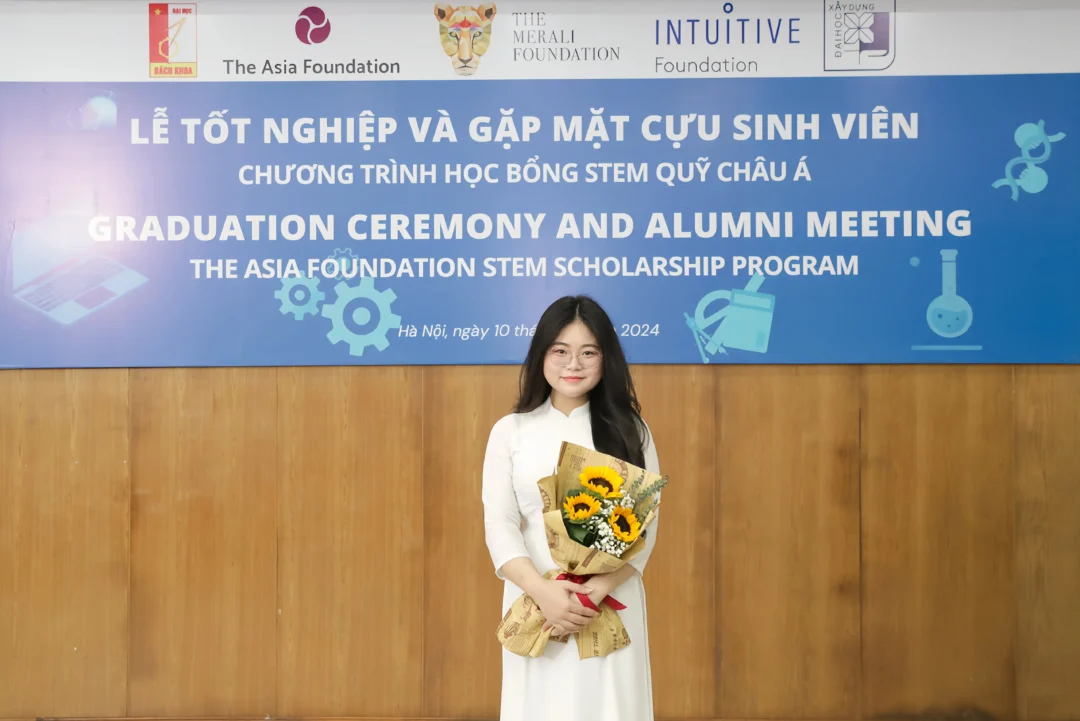
Trần Thị Thu Quỳnh grew up in a small family in Lạng Sơn, a quiet border province in northern Vietnam. Unlike most girls in her community, she completed high school and entered university. And unlike most women in Vietnamese universities, she studied electronics and telecommunication engineering.
However, her dream of a tech career almost ended in her second year of university when her father passed away from cancer, leaving her mother as the family’s only provider. The following year, her mother was diagnosed with cancer and began long-term chemotherapy and radiotherapy.
On the verge of having to drop out of school and care for her mother, Quỳnh received a lifeline in the form of a scholarship from The Asia Foundation. The financial aid allowed Quỳnh’s mother to focus on treatment without worrying about tuition, and Quỳnh continued her studies.
She was one of 2 women in a class of 50. She won academic awards, participated in research and internships, and today is a quality-assurance engineer at a multinational company, contributing to digital solutions.
A pivotal moment in Vietnam’s development journey
As Vietnam accelerates toward a knowledge-based, innovation-driven economy, demand for a highly skilled workforce—particularly in science, technology, engineering, and mathematics (STEM)—has never been greater. From digital transformation and high-tech manufacturing to climate resilience and smart agriculture, Vietnam’s priority sectors—and national development strategies—depend on adaptable, technologically fluent, and innovative talent.
Yet one of Vietnam’s most powerful resources remains underutilized: girls and young women—especially those from rural, mountainous, and ethnic minority communities. Despite significant national progress in education and gender equality, structural barriers continue to limit their participation in STEM education and careers. Addressing this gap is not only a matter of social equity—it is a strategic investment in Vietnam’s long-term growth, resilience, and competitiveness.
Taking a long-term, ecosystem-based approach
For more than two decades, The Asia Foundation’s STEM pathway program has been working alongside schools, communities, and local authorities to help the country realize its economic vision. The program, funded by a variety of foundations and philanthropists, strengthens STEM education pathways, builds future-ready skills, reduces inequities for vulnerable groups, and aligns learning and career preparation with Vietnam’s priority science and technology sectors.
Since the program’s 2004 launch, it has evolved from a scholarship-focused initiative into a comprehensive STEM pathway model that supports students from secondary school through higher education and into the workforce.
The program recognizes that talent alone is not enough. Girls from low-income, rural, and ethnic minority backgrounds often encounter multiple, reinforcing barriers: financial hardship, limited exposure to STEM careers, gender norms, gaps in digital access, and resource-constrained schools. Addressing these challenges requires an ecosystem approach.
Accordingly, the program works not only with students, but also with schools, teachers, local partners, and provincial stakeholders to create a more inclusive STEM environment. Financial support is paired with academic mentoring, skills development, and career guidance. Local partnerships help ensure relevance, sustainability, and alignment with regional development needs.
Aligning inclusion with national priorities
At the heart of this work are the girls and young women themselves. With the right support, they gain more than academic credentials. They build confidence, problem-solving skills, digital literacy, and a sense of belonging in STEM fields where they have historically been underrepresented.
In Quỳnh’s case, these components built a bridge from uncertainty to opportunity. They strengthened her academic performance, increased her confidence in a male-dominated field, and prepared her for global career pathways. The shift was measurable: from struggling with family hardship to securing awards, international internships, and a competitive role in a multinational company.
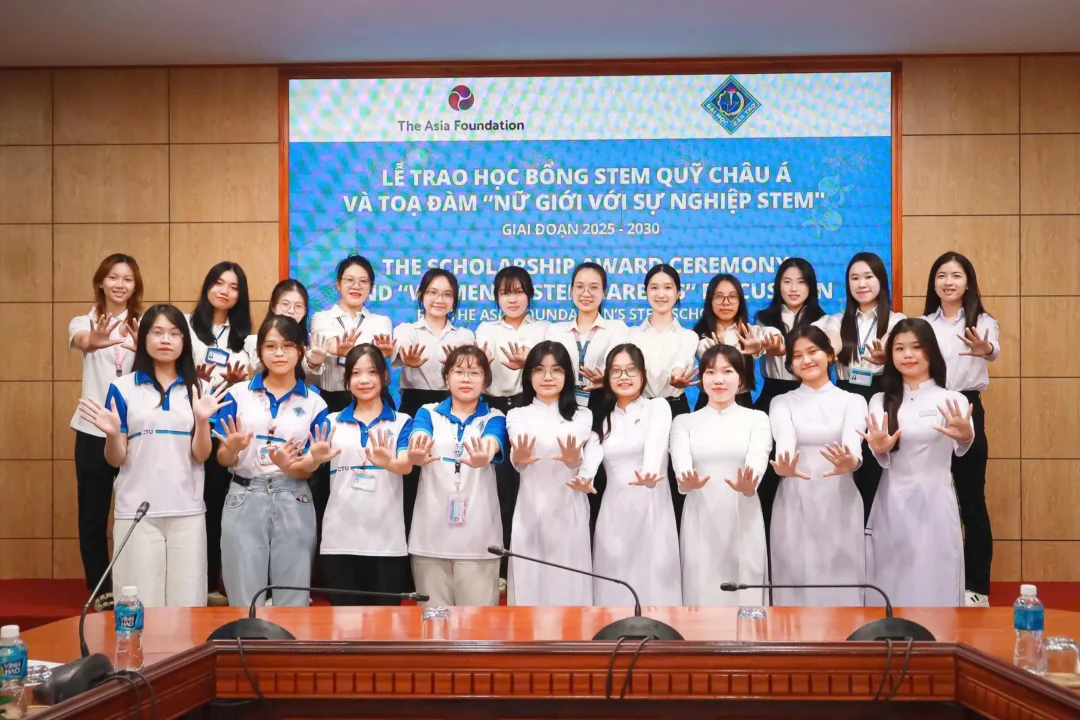
Quỳnh’s story is just one among nearly 4,000 young women supported by The Asia Foundation. But this number is modest compared to Vietnam’s real needs and long-term goals. The evidence is clear. The model works. The opportunity now is to scale and sustain it.
The need: long-term, flexible funding
The next phase of the STEM pathways program work focuses on deepening impact in four critical areas.
First, integrated financial and academic support will remain essential to ensure that disadvantaged students can persist and succeed in increasingly demanding STEM pathways.
Second, future-ready skills and digital literacy—including emerging technologies, data skills, and problem-based learning—must be embedded across the student journey.
Third, career-oriented training with strong employer linkages will help bridge the gap between education and employment, ensuring that young women are prepared for real opportunities in priority sectors.
Finally, gender-responsive STEM environments must be strengthened through ongoing investment in teachers, schools, and local partners. Inclusive ecosystems do not emerge by chance; they are built through deliberate, sustained effort. The Asia Foundation can’t do this on its own. Partners ranging from bilateral donors to the Vietnamese government to civil society all need to increase investment in bringing more girls and women into STEM education and careers.
A future that leaves no talent behind
Vietnam’s future prosperity depends on a skilled, innovative, and inclusive workforce. Young women—especially those facing the greatest barriers—are essential to that future. When we invest in girls’ education and STEM pathways, we are not only transforming individual lives. We are strengthening families, empowering communities, and advancing national goals in gender equality, digital transformation, and workforce development.
Quỳnh hopes her story encourages more young women to step into STEM—not because the journey is easy, but because the opportunities are real for those who dare to try.
To help support this work, reach out to our Vietnam office at vietnam.general@asiafoundation.org or our philanthropy team at giving@asiafoundation.org. Together, we can help Vietnamese girls and young women to learn, lead, and shape Vietnam’s next generation of innovation.